Why So Many Beginners Ask “What Is a Drone?
Drones have become part of everyday conversation. You hear about them in the news, see them in videos online, or notice them flying in parks and open spaces. Yet for many beginners, the word drone still feels vague, technical, or even intimidating.
That confusion is completely normal.
Most people encounter drones long before they ever touch one, and the explanations they find are often filled with technical terms, specifications, or assumptions about prior knowledge. As a result, beginners are left wondering whether drones are complicated machines meant only for experts.
This article exists to remove that uncertainty.
Here, we’ll explain what a drone is in simple, clear language, without technical jargon or pressure to buy anything. The goal is not to turn you into an expert, but to help you understand the concept comfortably—so you can decide, at your own pace, whether learning more feels right for you.
What Is a Drone? (The Simple Definition)
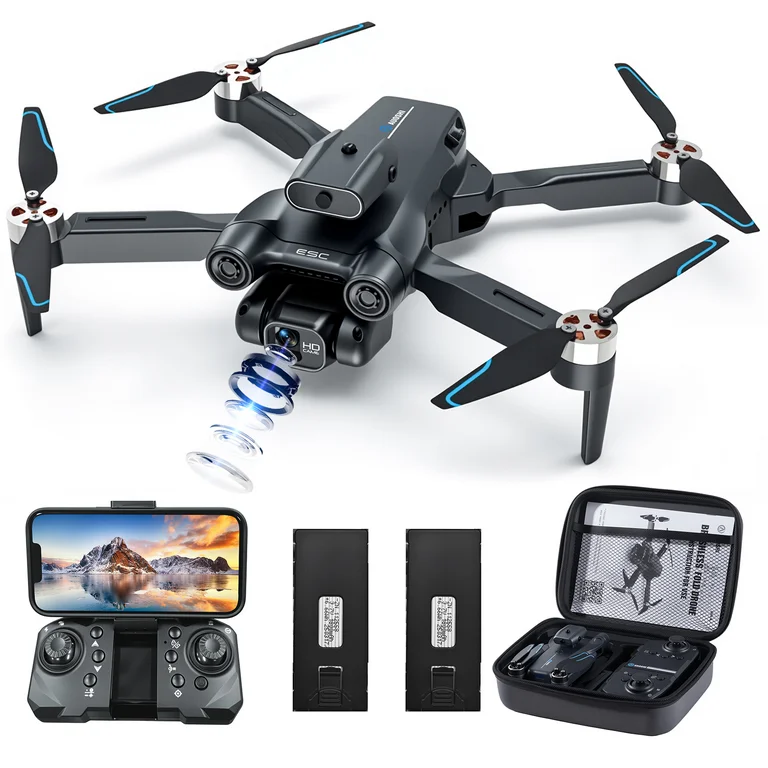
A drone is a small flying device that you control from the ground, either directly with a controller or with help from built-in software that keeps it stable and responsive.
In simple terms, a drone is a flying tool designed to move smoothly through the air while helping you stay in control.
Most modern drones use multiple spinning propellers to lift off, hover, and change direction. If you’re curious about the simple mechanics behind this stability, you can explore it further in our guide on How Drones Work. They are powered by rechargeable batteries and guided by a remote controller, a smartphone app, or both. Behind the scenes, onboard sensors constantly adjust the drone’s movement to keep it balanced and steady.
What makes drones especially beginner-friendly today is that much of the difficult work happens automatically. Instead of fighting to keep the drone level, beginners can focus on learning how it responds. How it moves, and how it feels to fly.
At its core, a drone is not about complexity or technical mastery. It is simply a controlled flying platform—one designed to make aerial movement accessible to everyday people. If you’re wondering how these designs differ, you can explore the main categories in our guide to Types of Drones Explained.
How a Drone Is Different from Other Flying Machines
At first glance, a drone may seem similar to other flying machines, similar to airplanes or helicopters. They all fly, after all. But drones are designed for a very different kind of experience—especially for beginners.
Airplanes rely on forward motion to stay in the air and are typically controlled by trained pilots. Helicopters are complex machines that require constant coordination to remain stable. Both demand significant skill and experience.
Drones, by contrast, are built for controlled, stable flight at low speeds. Most beginner drones can hover in place, rise or descend gently, and stop smoothly without drifting away. This ability to pause and remain steady is one of the key reasons drones are approachable for new pilots.
Another important difference is automation. Drones use onboard sensors and software to make thousands of small adjustments every second. These systems help maintain balance, orientation, and position, allowing beginners to focus on learning movement rather than fighting gravity.
In short, drones are not miniature airplanes or simplified helicopters. They are purpose-built flying devices, designed to make aerial control accessible, predictable, and forgiving—especially for those are flying for the first time.
How Drones Work (High-Level Overview)
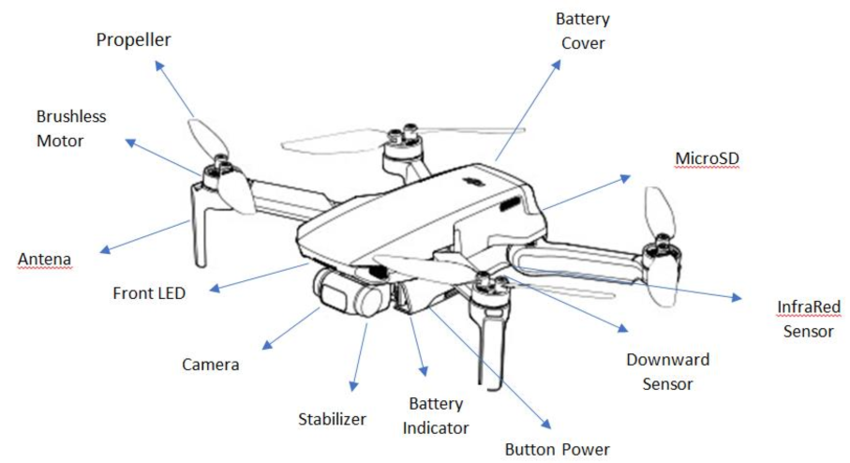
You don’t need to understand engineering to grasp how a drone works. At a high level, most drones rely on a small set of components working together in a coordinated way.
A typical drone uses electric motors to spin its propellers. These spinning propellers create lift, allowing the drone to rise into the air, hover in place, or move in different directions. Power comes from a rechargeable battery, which supplies energy to both the motors and the onboard systems.
The drone responds to commands sent from a controller or smartphone app. When you move a joystick or tap a control, the drone interprets that input and adjusts its movement accordingly. Behind the scenes, onboard sensors constantly monitor balance and position, making tiny corrections to keep the flight smooth and stable.
What’s important for beginners to understand is that modern drones are designed to assist, not challenge. Much of the complex balancing happens automatically. Instead of struggling to keep the drone level, beginners can focus on learning how it moves, how quickly it responds, and how to guide it comfortably through the air.
At this stage, you don’t need to worry about the technical details. Knowing that drones combine motors, batteries, controls, and smart stabilization is enough to understand how they function as a whole.
What People Commonly Use Drones For
When beginners first think about drones, they often imagine professional filming crews or complex commercial work. In reality, most people start using drones for much simpler—and more enjoyable—reasons.
Many beginners fly drones purely for fun and exploration. Watching a drone lift off, hover, and move smoothly through the air can be surprisingly satisfying. It offers a new perspective on familiar places, even in small parks or open spaces. If you’re interested in the many ways people use drones today, from recreation to creative work, see our guide on What Drones Can Be Used For.
Others are drawn to creative uses, such as taking photos or short videos from above. Even basic drones can capture angles that aren’t possible from the ground, making everyday scenes feel new and interesting. Creativity often develops naturally as confidence grows.
Some people also explore practical uses, like inspecting a roof, checking a large property, or understanding how aerial tools work. These uses don’t require professional skills at the beginner stage, which merely demonstrates how versatile drones can be.
What matters most is that beginners don’t need a specific purpose to start. Many people begin with curiosity alone. Over time, interests become clearer, skills improve, and new possibilities emerge naturally.
Common Beginner Misunderstandings About Drones
Many beginners approach drones with a few common assumptions that can make the learning process feel more intimidating than it needs to be.
One common belief is that drones are hard to fly. While older or more advanced models can require skill, most modern beginner drones are designed to be stable and forgiving. They are built to help new pilots learn gradually and not to be overwhelmed by them.
Another misunderstanding is that you need technical knowledge right away. In reality, beginners do not need to understand specifications, software, or complex controls to start. Those details become relevant later, but early learning focuses on basic movement and comfort.
Some people also assume that drones are only for professionals—filmmakers, engineers, or commercial operators. This isn’t true. Many drone owners start with no professional goal at all. They want to explore, learn, and enjoy the experience of flying.
Finally, beginners often worry that they must commit fully from the start. In truth, learning about drones happens in stages. Curiosity leads to understanding, understanding leads to confidence, and confidence opens the door to more confident skills—only if and when you choose.
Recognizing these misunderstandings early helps remove unnecessary pressure and allows learning to feel approachable and enjoyable.
What This Means for You as a Beginner
Understanding what a drone is can change how the entire learning process feels. Instead of seeing drones as complicated machines, you can begin to view them as tools designed to help you learn at your own pace.
As a beginner, you don’t need to master everything at once. Flying a drone is not about perfection or speed—it’s about familiarity. Each small flight builds comfort. Each moment of control builds confidence.
Modern drones are designed to support this gradual learning. They allow you to pause, hover, adjust, and recover without panic. That means mistakes become part of the learning process rather than something to fear.
Most importantly, there is no pressure to decide where your drone journey will lead. Some people remain casual flyers. Others grow into creative or technical roles over time. Both paths are valid.
At this stage, your only goal is understanding. Once that foundation is in place, everything else becomes easier and more enjoyable. Our “Beginners ‘ Guide” is a basic foundation that will open your
Your Next Step — Understanding How Drones Actually Work
Now that you have a clear understanding of what a drone is, the next natural question is how drones stay stable, respond to your controls, and move smoothly through the air.
You don’t need technical knowledge to learn this. In fact, the best place to continue is with an explanation that focuses on concepts rather than specifications
If you’d like to take the next step, continue here:
How Drones Work (Without the Technical Jargon)
Beginner Glossary
Drone
A remotely controlled flying device that uses propellers and onboard sensors to stay stable in the air.
Propeller
The spinning blades push air downward, lifting the drone into the air.
Controller
A handheld device used to guide the drone’s movement.
Questions Beginners Ask:
What exactly is a drone?
A drone is a small flying device controlled from the ground using a remote controller or smartphone app.
Do beginners need technical knowledge to fly a drone?
No. Modern drones are designed to stabilize themselves automatically so beginners can focus on learning basic control.
Are drones only used by professionals?
No. Many people use drones for recreation, photography, and learning before exploring more advanced uses.